Best Stainless Steel Cat Water Fountain 2026: Top Picks, Key Features
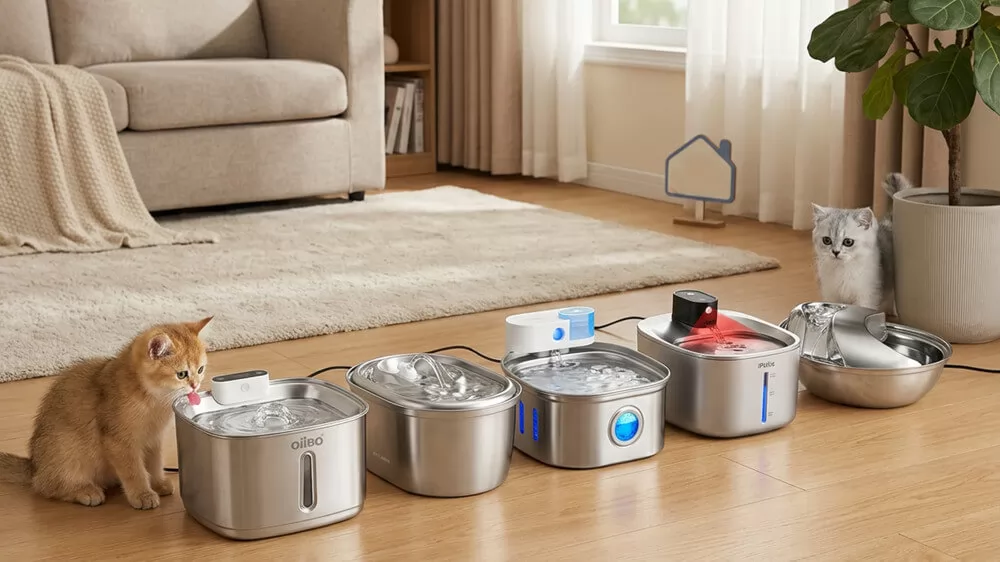
As pet owners place greater emphasis on hygiene, convenience, and long-term product quality, stainless steel cat water fountains continue to gain popularity across global markets. Compared with traditional plastic alternatives, stainless steel fountains offer improved durability, easier maintenance, and a more premium user experience.
But in 2026, material alone is no longer enough. The best-selling fountains combine food-grade stainless steel with wireless operation, water-electric separation, and genuinely easy cleaning. In this guide, we break down the features that define the category leaders, rank the top stainless steel cat water fountains of 2026, and look at the market trends shaping what comes next.
Why Stainless Steel Continues to Gain Popularity
Improved Hygiene
Unlike many plastic surfaces, stainless steel is non-porous and easier to clean. Plastic develops microscopic scratches over time where biofilm and bacteria can anchor — a common cause of the "slime" pet owners notice and even feline chin acne. Stainless steel resists this buildup, is less likely to retain odors, and helps maintain a cleaner drinking environment over time.
Enhanced Durability
Stainless steel offers excellent resistance to scratches, discoloration, and daily wear, making it suitable for long-term use in both single-pet and multi-pet households.
Not All "Stainless Steel" Is Equal
One important caveat: many budget fountains are marketed simply as "stainless steel" without specifying the grade.Premium fountains use 304 food-grade stainless steel — the same corrosion-resistant alloy used in commercial kitchen equipment. Lower-grade steel (such as 201) may look identical at first but can develop pitting or rust spots along the waterline within months. When comparing products, always confirm the steel grade.
Premium Product Positioning
Consumers increasingly associate stainless steel products with quality and reliability, making them a popular choice in mid-range and premium market segments.
Product Definition
What Makes the Best Stainless Steel Cat Water Fountain in 2026?
While material selection remains important, the best-selling products today are defined by much more than stainless steel construction alone. Four features have emerged as the key differentiators.
1Water-Electric Separation Design
One of the most significant developments in recent years is the adoption of water-electric separation structures. By keeping electrical components apart from the primary water reservoir — for example, through external or magnetically driven pumps — these designs improve safety, simplify cleaning, and reduce the risk of pump failure.
2Wireless and Dual-Power Operation
Wireless fountains continue to gain market share as consumers look for greater flexibility throughout the home. Rechargeable battery systems allow users to place fountains anywhere — kitchen, bedroom, or balcony — without relying on nearby power outlets. Cordless designs also eliminate the risk of cats chewing on cables.
3Easy-Clean Modular Structures
Maintenance remains one of the most important factors influencing customer satisfaction — and "cleaning anxiety" is one of the most common complaints. Modern fountains increasingly feature modular designs that allow quick, tool-free disassembly, with dishwasher-safe water-contact components.
4Smart Multi-Mode Operation
Motion sensing technology is becoming a standard feature in battery-powered fountains. By activating water flow only when pets approach, sensor modes conserve energy and encourage natural drinking behavior. The most flexible systems offer three modes — sensor-activated, intermittent, and continuous.
Product Review
The Best Stainless Steel Cat Water Fountains of 2026
We evaluated the leading products on five criteria: steel grade, power flexibility, cleaning experience, smart operating modes, and safety architecture.
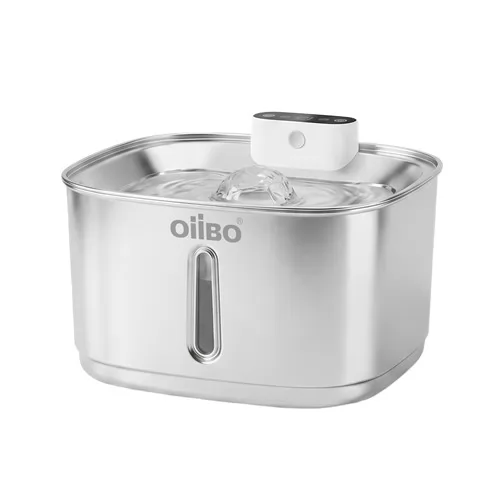
OiiBO Wireless Smart Stainless Steel Water Fountain
Best Overall
Highlights
- 304 food-grade stainless steel: Durable and dishwasher-safe.
- 4000mAh rechargeable battery: Supports both wireless and wired use.
- 3 operating modes: Sensor, Intermittent, and Continuous.
- Water-electric separation: Keeps electrical components away from the water.
- 3.2L capacity: Suitable for daily hydration.
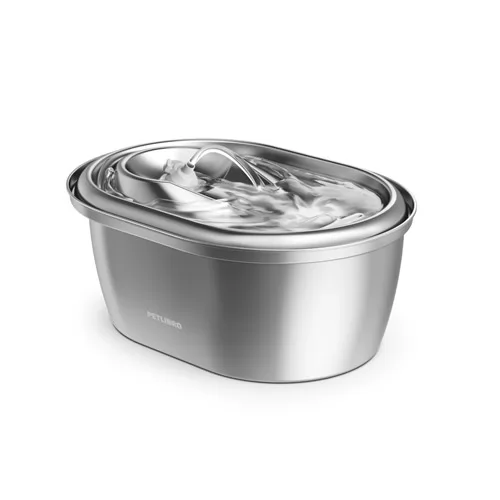
PETLIBRO Stainless Steel Water Fountain
Best App-Connected
Highlights
- 304 stainless steel tray: Durable and easy to clean.
- 3L water capacity: Suitable for cats and small dogs.
- 5-layer filtration: Helps maintain cleaner drinking water.
- Ultra-quiet pump: Operates at around 23 dB.
- Corded operation: Provides continuous water circulation.
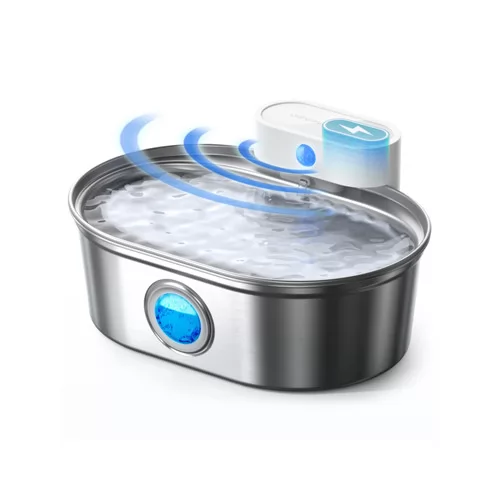
Uahpet Upgrade Visible Stainless Steel Cat Water Fountain Pro
Longest Battery Life
Highlights
- 304 stainless steel tray: Hygienic and corrosion-resistant.
- 130-day battery life: In sensor mode under typical usage.
- 2L capacity: Compact footprint for everyday use.
- Visible water tank: Easy to monitor remaining water.
- Water-electric separation: Simplifies cleaning and improves safety.
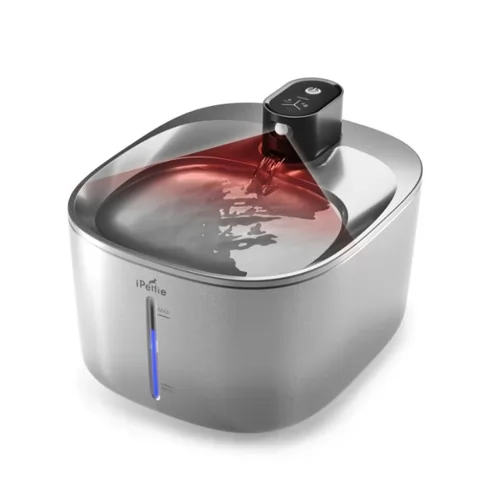
iPettie Runway Wireless Fountain
Best Large Capacity
Highlights
- 4L capacity: Suitable for multi-pet households.
- 45-day battery life: Supports cordless placement.
- 5-stage filtration: Helps improve water quality.
- Rechargeable design: No constant power connection required.
- Water level indicator: Reminds users when refilling is needed.
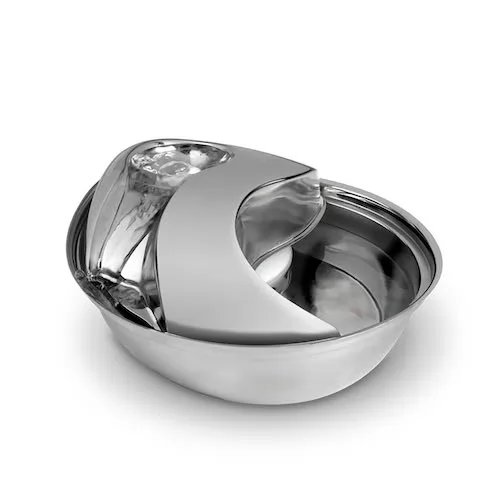
Pioneer Pet Raindrop Fountain
Best Classic Design
Highlights
- 60 oz (1.8L) capacity: Suitable for daily hydration.
- Stainless steel construction: Dishwasher-safe and durable.
- 30-day charcoal filter: Helps maintain cleaner water.
- Continuous water flow: Encourages drinking.
- Corded operation: Always-on circulation.
Quick Comparison
Industry Insights
Key Trends Shaping the Market in 2026
As the category continues to evolve, several trends are expected to influence future product development and consumer preferences.
Wireless Designs Continue to Drive Premium Product Growth
Battery-powered operation is no longer limited to premium products. More brands are introducing cordless solutions to meet growing consumer demand for flexible placement, pet safety, and cleaner home environments.
Smarter Hydration Systems
Features such as sensor activation, multi-mode operation, maintenance reminders, and app-based hydration tracking are becoming increasingly common across higher-value product segments.
Simplified Maintenance
Consumers continue to prioritize products that are easy to clean and maintain. Modular structures, tool-free disassembly, and dishwasher-safe components are becoming decisive selling points for new product launches.
Safety-First Architecture
Water-electric separation is moving from a premium differentiator to an expected standard, driven by consumer awareness of pump safety, leak prevention, and product longevity.
Advanced Water Management
Emerging concepts such as clean-water and wastewater separation are beginning to attract attention as manufacturers explore new ways to improve water quality and drinking hygiene.
Market Segmentation
Differentiated needs are driving specialized product lines — ultra-large capacity solutions for multi-pet homes, cordless stations for outdoor use, and IoT-integrated ecosystems each gaining dedicated market presence.
Choosing the Right Water Fountain
The best stainless steel cat water fountain in 2026 is defined by more than just premium materials. Buyers increasingly expect products that combine food-grade stainless steel with practical innovations such as wireless dual-power operation, water-electric separation, simplified maintenance, and intelligent operating modes.
For brands, retailers, and distributors, staying aligned with these evolving expectations is essential for building competitive product portfolios. As the market continues to evolve, manufacturers that integrate these features into a well-balanced product design will be better positioned to meet changing consumer demands.
Contact Us
0
Comments
Leave a Comment
Your email address will not be published. Required fields are marked *
Name can't be empty
Email error!
Message can't be empty
😍
😜
😳
😌
😄
😘
😝
😒
😃
😚
😚
😛
😟
😧
😀
😉
😓
😱
😤
😣
😂
😥
😩
😠
😢
😭
😰
😨
😡
😆
😪
😅
😐
😇
😋
😴
👿
😕
😏
😷
😵
😟
😮
😯
😑
👧
👴
😧
😬
😾
👶
👱
👵
👸
🙀
👺
👦
👩
👨
😽
😿
🙈
💩
💥
💤
😼
😹
🙉
🔥
✨
💦
👎
✌
👆
👈
💪
💹
👍
👊
💴
💶
💷
💸
👉
💵
🙏
🌎
🏧
👏
💳
👇
💑
🙆
🙅
💁
👫
👭
🙎
🙇
👑
👔
Submit Comment
Most Popular
-
 Jul 14, 2026Top 8 Smart Pet Feeder Manufacturers in China 2026
 -
 Jul 08, 2026Best Stainless Steel Cat Water Fountain 2026: Top Picks, Key Features
 -
 Sep 07, 2026Top 10 Cat Feeder Manufacturers in China 2026
 -
 Jun 09, 2026OiiBO at Interzoo 2026


Laster Blogs


Set A Consultation Today
Name can't be empty
Email error!
Send Your Message
*We respect your confidentiality and all
information are protected.
